


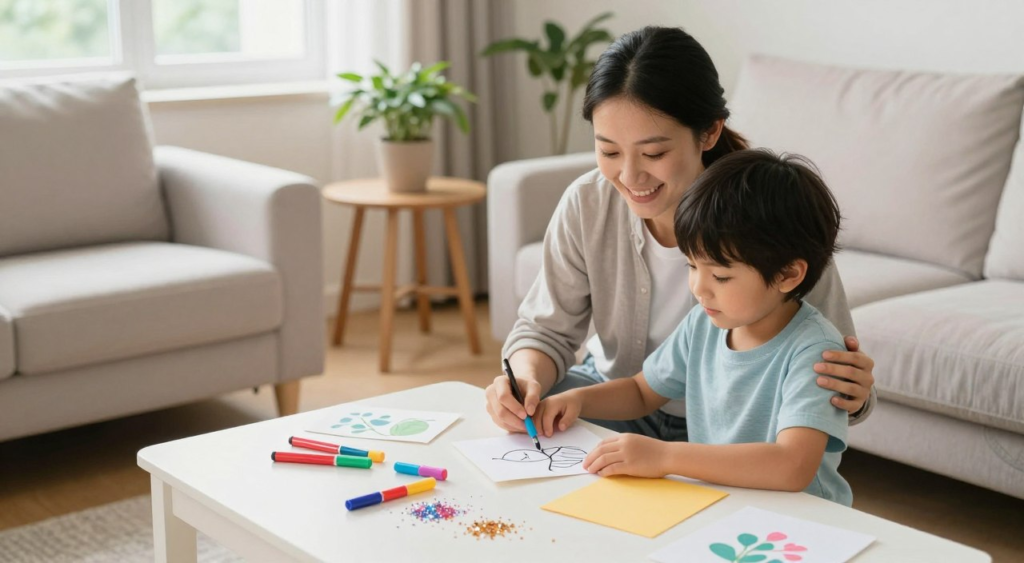
Teaching ways to encourage compassion makes your family closer. It helps them grow up to be kind and emotionally strong.
- Building compassion promotes healthy social growth.
- Simple daily projects help children learn empathy easily.
Teaching kids to be generous is key. It helps others and makes them happier.
Adding kindness to your daily life shows kids everyone is special. Small acts, like using compliment jars, start a warm home.
Nurturing goodwill in your residence teaches kids to be empathetic. These small steps have a big effect on their growth.
Find out how your family can help make the world better together today.
Why Teaching Kindness at Home Matters
Teaching kids to be kind is key for their growth. It helps them understand and care for others. Studies show kindness makes us happier, builds better friendships, and even keeps us healthy.
Parents play a big role in teaching kindness. Psychology Today says rewarding kids for being kind can sometimes make them less motivated. So, it’s important to help them want to be kind for real.
| Benefits of Kindness | Description |
|---|---|
| Increased Happiness | Kindness makes us happier, in kids and adults. |
| Better Relationships | Being kind helps us make stronger, more meaningful friendships. |
| Improved Physical Health | Kindness can lower blood pressure and make our hearts healthier. |
In short, teaching kindness at home benefits everyone. By cultivating empathy and kindness, parents raise happy, well-adjusted kids who care for others. As shown in the table, kindness affects many parts of a child’s life.
Kindness Activities for Kids at Home: Family-Focused Ideas
Teaching kindness at home is key for strong family bonds. Doing kindness activities together makes your home happier and more loving for everyone.
“Kindness is a language that the deaf can hear and the blind can see.” This quote shows kindness’s big impact. It’s great to teach your kids to be kind and caring.
1. Create a Family Compliment Jar
Make a family compliment jar. Everyone writes kind words for each other. Put it in a place like the kitchen or living room.
Read the compliments aloud when you gather. It makes everyone feel good and happy. It’s a simple way to spread kindness and thanks.
2. Cook a Surprise Meal for a Family Member
Cooking a surprise meal is a kind thing to do. It could be their favorite dish or cookies. It’s fun and teaches kids about cooking and sharing meals.
Let your kids help with planning and making the meal. It’s a fun way to bond and make memories.
3. Start a Weekly Family Kindness Challenge
Start a weekly kindness challenge. List simple acts of kindness for everyone to do. Like helping with chores or surprising a sibling.
See who can do the most kindness or work together. It teaches teamwork and understanding.
4. Design a Family Kindness Calendar
Make a kindness calendar for your family. It has 30 or 31 days of kindness acts. Like writing thank-you notes or helping a neighbor.
Put it where everyone can see it. Mark each kindness done. It shows your family’s kindness efforts and motivates you to keep it up.
Acts of Kindness for Neighbors and Community
Being kind at home is great, but don’t forget about your neighbors and community. Acts of kindness there can make everyone feel better. It helps create a kinder place for all.
Here are some easy ways to be kind in your community:
Bake Treats for Your Neighbors
Baking treats for neighbors is a nice thing to do. It shows you care and want to make them happy. Try baking cookies or cakes they’ll like.
Create Care Packages for Local Shelters
Helping local shelters with care packages is very kind. You can include things like toiletries and food. It’s a good way to teach kids about helping others.
Leave Cheerful Chalk Messages on Sidewalks
Writing fun chalk messages on sidewalks is fun. You can draw smiles or write nice words. It makes people happy as they walk by.
Organize a Toy and Book Donation Drive
Starting a toy and book drive is a great idea. It helps during holidays or special times. Donate them to places that need them.
Here’s a table to help plan your donation drive:
| Item | Quantity | Condition |
|---|---|---|
| Toys | 50 | Gently used |
| Books | 100 | Good condition |
| Clothing | 20 | Gently used |
Mahatma Gandhi said, “The best way to find yourself is to lose yourself in the service of others.” Being kind helps you and others grow.
“Kindness is the language which the deaf can hear and the blind can see.”
Mark Twain
Doing these kind acts daily can change your community. It’s a wonderful way to teach kids about caring and giving.
Creative DIY Kindness Projects


Doing DIY kindness projects is a great way to teach kids about kindness at home. These projects help kids be creative and show kindness in real ways. They learn to care for others by making something special for them.
Here are some fun DIY kindness projects for kids:
Make Friendship Bracelets to Share
Making friendship bracelets is a simple yet meaningful act. Use colorful threads and beads to make them. Encourage your kids to share them with friends and family.
Build a Little Free Library Box
A Little Free Library promotes reading and kindness. Build or repurpose a box and fill it with books. This teaches kids about sharing and the love of reading.
Design Thank You Cards for Essential Workers
Essential workers often go unappreciated. Designing thank you cards is a thoughtful way to show thanks. Your kids can be creative and express gratitude in their own way.
“Gratitude unlocks the fullness of life. It turns what we have into enough, and more.”
Melody Beattie
Create Kindness Coupons for Family Members
Kindness coupons are a fun way to show love and care. Your kids can make coupons for help or hugs. This encourages them to think of others and show kindness in personal ways.
| Project | Materials Needed | Benefits |
|---|---|---|
| Friendship Bracelets | Colorful threads, beads | Promotes friendship, creativity |
| Little Free Library | Wood or cardboard box, books | Fosters reading, community sharing |
| Thank You Cards | Cardstock, markers, glue | Shows appreciation, encourages gratitude |
| Kindness Coupons | Paper, markers, scissors | Promotes family bonding, kindness |
These DIY kindness projects help spread joy and kindness. They teach valuable lessons and create lasting memories.
Daily Kindness Habits to Build Empathy
Teaching kids to be kind is very important. It helps them understand others better. Kindness makes strong friendships and a caring community.
Simple acts like sharing meals or saying thanks can help. These actions teach kids to see things from others’ points of view. They make our world a better place.
Here are some easy ways to start being kind every day.
13. Practice the Three Good Things Evening Routine
The “Three Good Things” routine is a children’s mindfulness exercise. It’s about sharing three good things from the day. This makes kids feel thankful and happy.
Do this at dinner or before bed. Ask everyone to share three good things. It could be something fun or something learned.
14. Start a Family Kindness Journal
A kindness journal helps kids think about their day. It shows how their actions affect others. This builds empathy.
Choose a notebook or app for your family. Have each person write or draw about kindness they see or do. It’s a great way to teach empathy and kindness.
15. Use Kindness Conversation Starters at Dinner
Dinner is a great time to talk about kindness. Kindness starters help kids think about others’ feelings. This teaches empathy.
| Conversation Starters | Purpose |
|---|---|
| “What was the kindest thing someone did for you today?” | Encourages reflection on positive interactions |
| “How can we show kindness to someone tomorrow?” | Promotes planning and thinking ahead |
| “What does it mean to be kind to someone who is feeling sad or upset?” | Fosters understanding and empathy |
By doing these kindness habits every day, your kids will learn important skills. Remember, being consistent is key. Make kindness a part of your daily life.
Nature and Animal Kindness Activities

Doing nature and animal kindness activities helps kids feel empathy and compassion. These activities make them care more about the environment. They learn to take responsibility for it.
16. Build Bird Feeders from Recycled Materials
Building bird feeders from recycled stuff is fun and teaches kids about wildlife care. You can use old plastic bottles, wooden dowels, and peanut butter. It’s a creative way to reuse and recycle.
“The clearest way into the Universe is through a forest wilderness.” John Muir said this. Building bird feeders lets kids see and enjoy nature. It helps them understand the value of caring for birds.
17. Plant a Pollinator Garden Together
Planting a pollinator garden is great for the environment. It attracts bees, butterflies, and other pollinators. Kids learn about species connections and conservation.
While planting, talk about pollinators and our food. It’s a team effort that teaches kids about caring for the environment.
18. Create Water Stations for Wildlife
Setting up water stations for wildlife is kind. It helps animals during hot or dry times. You can use a birdbath or a shallow dish with fresh water.
Getting kids involved teaches them to care for others. It’s a lesson in empathy and compassion that helps in many areas of life.
Kindness Activities Using Art and Crafts
Teaching kindness can be fun with art and crafts. These activities help kids grow their skills and show kindness.
Paint Kindness Rocks to Hide Around Town
Painting kindness rocks is a great way to spread joy. Kids can decorate rocks with messages or pictures. Then, they hide them for others to find.
Create a Gratitude Tree Display
A gratitude tree shows what your family is thankful for. You can make a tree on paper or canvas. Family members write things they’re thankful for on leaves or flowers.
Design Bookmarks for Your Local Library
Designing bookmarks for the library is a kind act. Kids can get creative with messages or patterns.
These projects are fun and teach kindness. They help kids see how their actions help others.
| Activity | Description | Impact |
|---|---|---|
| Paint Kindness Rocks | Decorate rocks with uplifting messages and hide them in public places. | Spreads joy and positivity in the community. |
| Gratitude Tree Display | Create a visual representation of things you’re thankful for. | Fosters a sense of gratitude among family members. |
| Design Bookmarks | Create bookmarks for your local library. | Shows appreciation for the library’s services. |
Teaching Gratitude and Connection Through Kindness
Teaching kids to be kind and thankful is easy with simple activities at home. Doing things that show gratitude helps kids see the good in the world. It makes them feel closer to their family.
Write Letters to Relatives or Friends
Writing letters is a great way to teach kids to be thankful. Ask your kids to write to people they care about. It’s good for their writing and helps them feel grateful.
Record Thank You Video Messages
Recording videos to say thank you is fun. Have your kids make videos for those who helped them. It’s a good way to show thanks and learn to communicate.
Create a Family Gratitude Collage
Making a collage is a fun way to show gratitude. Use photos, drawings, and notes. It’s a way to remember to be thankful for the good things.
Here’s a table showing how these activities help kids:
| Activity | Benefits |
|---|---|
| Writing Letters | Develops writing skills, nurtures gratitude and empathy |
| Recording Video Messages | Improves communication skills, expresses gratitude in different forms |
| Creating a Gratitude Collage | Fosters a sense of gratitude, promotes family bonding |
Doing these activities daily helps kids feel more thankful and empathetic. It makes your family’s relationships stronger.
Random Acts of Kindness for Special Occasions
Special times are great for showing kindness. Holidays, birthdays, and other big events are perfect. Doing kind things makes these moments special for everyone.
Showing kindness on special days can be very impactful. You can join community events, give to charities, or help someone in need. These actions bring joy to others.
25. Deliver Holiday Care Packages to Nursing Homes
Bringing holiday care packages to nursing homes is a kind act. You can fill packages with blankets, snacks, or games. It’s a great way to teach kids about empathy and giving.
Adapting Kindness Activities for Different Ages
It’s important to think about your kids’ age and abilities when planning kindness activities. Young kids can make cards or decorate packages. Older kids can help with bigger tasks like organizing donations or volunteering.
| Age Group | Activity Suggestions |
|---|---|
| Preschoolers (3-5 years) | Making cards, drawing pictures for care packages |
| School-age kids (6-12 years) | Packaging care packages, writing thank-you notes |
| Teenagers (13+ years) | Organizing donation drives, volunteering at shelters |
Making Special Occasions More Meaningful
Adding kindness to special days is good for everyone. It teaches gratitude and empathy. It makes the celebration more special and lasting.
Think about how you can add kindness to your special occasions. Every small act helps build a kinder home.
Virtual and Digital Acts of Kindness

In today’s world, teaching kids about kindness online is key. They spend a lot of time online. So, it’s important to teach them kindness in the digital world too.
There are many ways to be kind online. You can send messages of support or help with online fundraisers. These actions help kids feel empathy and see how their actions help others.
Sending Digital Kindness Cards and Messages
One way to be kind online is by sending e-cards. You can make and send digital cards for birthdays or just to say hello. It shows kids they can care for others even when they’re far away.
For example, you can make a digital card for someone who needs cheering up. It’s a great way to teach kids about being thoughtful online.
Participating in Online Fundraisers as a Family
Another way to be kind online is by helping with online fundraisers. These help people with medical bills or school needs. By picking a cause together, you teach kids about kindness in action.
Start by talking about causes you all care about. Then, pick one to support. Online fundraisers let you donate small amounts, so everyone can help. It’s a way to feel connected and kind together.
By doing these kindness activities for kids at home, you teach them kindness online. It helps them be kind in both the digital and real world. Encourage them to be kind online to make a difference everywhere.
Making Kindness a Lasting Family Tradition
To make kindness last in your family, start practices that keep going. This way, kindness becomes a big part of how you treat each other and the world. It’s a value that guides your actions.
Establishing Weekly Kindness Rituals
Make kindness a habit with weekly rituals. For example, have dinner where everyone talks about kindness they saw or did. Or pick a day for family bonding activities like helping at a charity or assisting a neighbor.
These rituals help family members feel empathy and compassion. Try a kindness jar where everyone writes down kindness they’ve seen. Then, share it at the week’s end.
Creating a Family Kindness Vision Board
A family kindness vision board is a great tradition starter. Use cardboard, magazines, scissors, and glue. Have everyone pick images and words that show kindness and their dreams.
As you make the board, talk about what kindness means to you. How can you live it every day? Display the board in your home to always remember your kindness promise.
Tips for Sustaining Kindness Practices Long-Term
Keeping kindness alive needs effort and commitment. Here are some tips:
- Talk about kindness at family meetings or dinners.
- Celebrate every kindness act, big or small.
- Be patient and keep working on kindness.
- Include everyone in planning kindness activities.
Follow these tips to make kindness a big part of your family. This way, you’ll leave a lasting positive mark on your family and the community.
Conclusion
Adding kindness activities for kids at home to your daily routine is key. It helps teach empathy and grow kindness in children. The ideas in this article are a great start to making your family kinder.
Doing these simple acts shapes your kids’ values and makes your home happier. It also helps them learn important life skills. These skills will help them a lot in the future.
Begin these kindness activities with your kids today. See how they change your family and community for the better. You’ll be helping make the world a kinder place, one small act at a time.
Kindness activities for kids at home: 25 simple ideas that feel special
Why Teaching Kindness at Home Matters
Building kindness at home is crucial for your child’s well-being and happiness. Studies show acts of kindness release oxytocin, the “love hormone.” This can improve physical health and reduce stress.Teaching empathy to children gives them tools for stronger, more meaningful relationships. Kindness helps your child view the world with more consideration and understanding.
Kindness Activities for Kids at Home: Family-Focused Ideas
Strengthening your family bond is a great place to start. These activities create a supportive and loving environment.### 1. Create a Family Compliment JarGrab an empty mason jar and some Post-it notes. Encourage everyone to write down one thing they appreciate about another family member each day and drop it in the jar. At the end of the week, read them aloud together.### 2. Cook a Surprise Meal for a Family MemberHave your kids help you whip up a favorite recipe from The Joy of Cooking or a fun treat they saw on Pinterest for a sibling or parent. It’s a delicious way to show they care.### 3. Start a Weekly Family Kindness ChallengeSet a goal every Sunday. Perhaps the challenge is to give three genuine compliments or to help with a chore without being asked. This keeps fostering kindness at home top of mind.### 4. Design a Family Kindness CalendarUse a Crayola marker set to map out a month of small acts. Having a visual reminder on the fridge makes kindness feel like a fun, achievable mission.
Acts of Kindness for Neighbors and Community
Reaching out beyond your home teaches your kids about social responsibility and the joy of contributing to the greater good.### 5. Bake Treats for Your NeighborsSpend an afternoon baking cookies using Nestlé Toll House morsels. Delivering a warm plate of cookies to a neighbor is a classic way to build community ties.### 6. Create Care Packages for Local SheltersGather essentials like toothbrushes, socks, and non-perishable snacks. This activity helps children understand the importance of compassion for those in different life circumstances.### 7. Leave Cheerful Chalk Messages on SidewalksUse Crayola sidewalk chalk to draw bright flowers and write “Have a Great Day!” on the pavement for passersby to see.### 8. Organize a Toy and Book Donation DriveGo through your playroom and find gently used items to donate to Goodwill or a local children’s hospital. It’s a great way to practice letting go of things to help others.
Creative DIY Kindness Projects
Artistic endeavors allow your kids to express their feelings through tangible gifts.### 9. Make Friendship Bracelets to ShareUsing embroidery floss from Michaels, your kids can craft colorful bracelets to give to friends or classmates, symbolizing the value of friendship.### 10. Build a Little Free Library BoxIf you’re handy, build a small wooden box for your yard. Participating in the Little Free Library movement encourages a love of reading and sharing throughout your neighborhood.### 11. Design Thank You Cards for Essential WorkersUse construction paper and glitter to create “Thank You” cards for mail carriers, sanitation workers, or healthcare staff. Acknowledging their hard work is a powerful lesson in gratitude.### 12. Create Kindness Coupons for Family MembersKids can “gift” coupons for “One Free Room Cleaning” or “30 Minutes of Playtime” to their parents or siblings.
Daily Kindness Habits to Build Empathy
Small, repeatable routines are what truly embed kindness into a child’s character.### 13. Practice the Three Good Things Evening RoutineBefore bed, ask your child to name three good things that happened that day. This mindfulness exercise helps them focus on the positive.### 14. Start a Family Kindness JournalKeep a notebook from Moleskine on the coffee table where anyone can jot down a kind act they witnessed or performed.### 15. Use Kindness Conversation Starters at DinnerAsk questions like, “Who were you kind to today?” or “Did anyone do something nice for you?” to make kindness the center of your family dialogue.
Nature and Animal Kindness Activities
Caring for the planet and its creatures fosters a deep sense of responsibility.### 16. Build Bird Feeders from Recycled MaterialsUse an old milk carton or pinecones covered in birdseed to feed local birds, following tips from the National Audubon Society.### 17. Plant a Pollinator Garden TogetherBuy some seeds from Burpee and plant flowers like milkweed or lavender to help bees and butterflies thrive in your backyard.### 18. Create Water Stations for WildlifeOn hot days, put out shallow bowls of water for thirsty squirrels and birds. It’s a simple way to show compassion for nature.
Kindness Activities Using Art and Crafts
Creativity and kindness go hand-in-hand to brighten someone’s day.### 19. Paint Kindness Rocks to Hide Around TownJoin The Kindness Rocks Project by painting smooth stones with uplifting messages and leaving them in local parks for strangers to find.### 20. Create a Gratitude Tree DisplayUse a large branch and paper leaves. Every day, have your child write something they are thankful for on a leaf and hang it up.### 21. Design Bookmarks for Your Local LibraryCreate handmade bookmarks and ask your local librarian if you can leave them in a “free to a good home” basket for other readers.
Teaching Gratitude and Connection Through Kindness
Gratitude is the foundation of a kind heart. These activities help children appreciate the people in their lives.### 22. Write Letters to Relatives or FriendsIn an era of texts, a handwritten letter on Hallmark stationery is a treasure. It teaches kids the value of taking time for others.### 23. Record Thank You Video MessagesUse your smartphone to record a quick “Thank You” video for a teacher or a grandparent. It’s an instant way to spread joy.### 24. Create a Family Gratitude CollageCut out pictures from magazines like National Geographic that represent things your family is grateful for and paste them onto a large poster board.
Random Acts of Kindness for Special Occasions
Special events provide the perfect opportunity to go above and beyond for others.### 25. Deliver Holiday Care Packages to Nursing HomesDuring the holidays, put together small gift bags with lotions, puzzles, and cards to deliver to a local senior living center.
Virtual and Digital Acts of Kindness
In our connected world, teaching your child to be kind online is just as important as being kind in person.### Sending Digital Kindness Cards and MessagesUse platforms like Canva or Punchbowl to design and send e-cards to friends who might be having a tough week.### Participating in Online Fundraisers as a FamilyVisit DonorsChoose or GoFundMe and let your child help choose a project or cause to support with a small portion of their allowance.
Making Kindness a Lasting Family Tradition
To ensure kindness remains a core value, establish rituals like a “Kindness Vision Board” or an annual “Family Day of Service.” By making these kindness activities for kids at home a permanent fixture in your life, you are raising a generation that values empathy and acts with heart.
How can I start fostering kindness at home without it feeling like a chore?
The best way is to integrate fun ways to teach kindness into your existing routines. Instead of making it a formal lesson, make it a game or a creative project. Using a “Family Compliment Jar” or a “Kindness Calendar” keeps the mood light and engaging for children of all ages.
What are some effective children’s mindfulness exercises that promote empathy?
Simple routines like the “Three Good Things” evening reflection or “Loving-Kindness Meditation”—where kids envision sending happy thoughts to friends and family—are excellent children’s mindfulness exercises. These help kids slow down and consider the feelings and experiences of others.
Are there specific kids’ kindness diy projects that work well for toddlers?
Absolutely! For younger children, kids’ kindness diy projects should be simple. Painting “Kindness Rocks” with bright colors or decorating “Thank You” cards with Crayola stickers are perfect ways for toddlers to express compassion without needing complex motor skills.
How does cultivating empathy in children benefit them in the long run?
Cultivating empathy in children is linked to higher emotional intelligence, better conflict-resolution skills, and improved academic performance. By teaching empathy to children, you are helping them become more resilient and better equipped to navigate social complexities in adulthood.
Can you suggest activities to promote compassion toward the environment?
Engaging in nature-based acts of kindness, such as building bird feeders from recycled materials or planting a pollinator garden with seeds from Burpee, are fantastic activities to promote compassion for the planet. It teaches kids that their actions can have a positive impact on all living things.