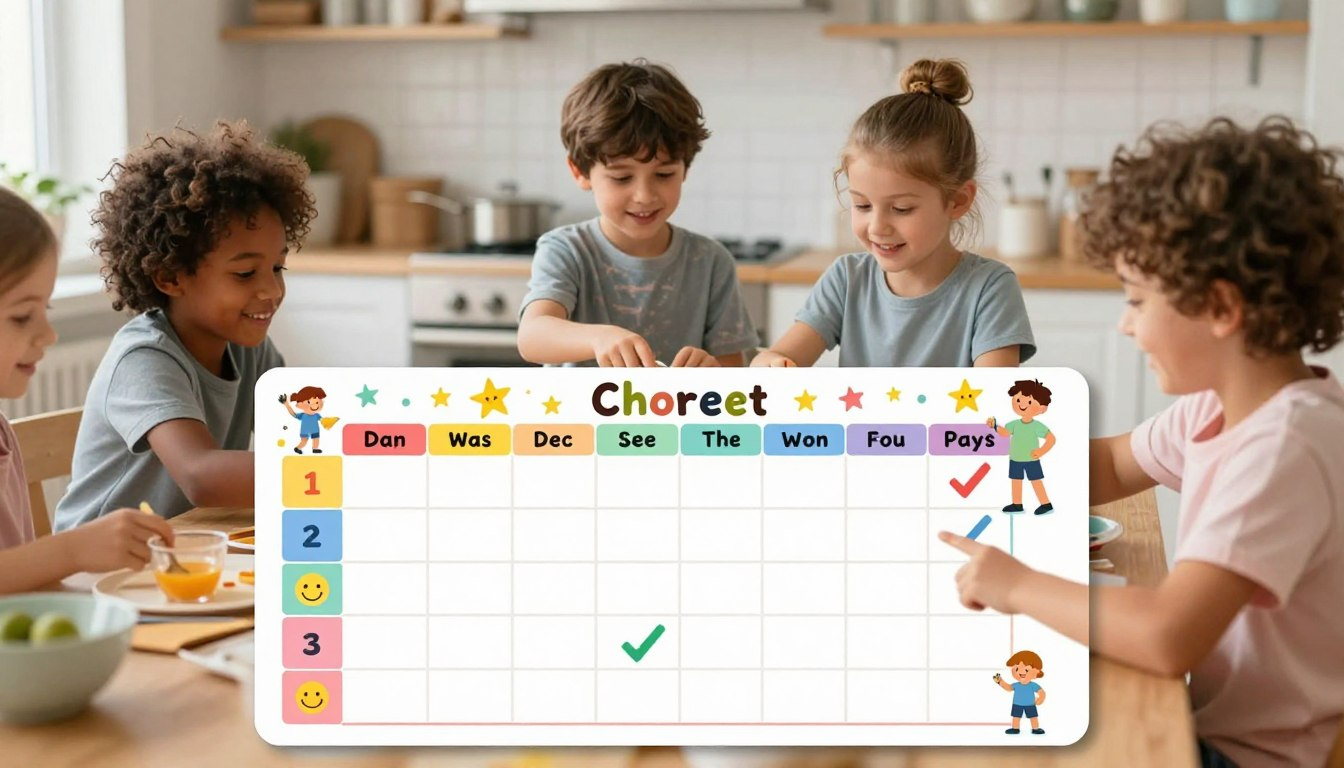
Many families struggle with daily chores. Parents wish for a day when everyone helps happily. It’s not just about cleaning; it’s about teaching lasting life skills and confidence.
A customizable chore chart template helps bring order. It shows kids their daily tasks clearly. Seeing their progress motivates them to keep helping.
Using a free chore chart download can change any home. It lets people take care of their own space. It makes helping feel like a fun game.
When everyone helps, the house stays tidy. This visual schedule makes chores feel rewarding.
This way, chores don’t stress anyone out. Instead, they help kids grow up. It makes every room a place of mutual respect and success.
- Foster Responsibility: Use visual tracking to help children understand their role in the family unit.
- Boost Motivation: Turn routine tasks into rewarding milestones with clear, customizable progress markers.
Why the “Helping at Home” Framework Transforms Children’s Attitudes Toward Chores
By seeing chores as ways to help, kids change how they view doing tasks at home. This method makes family work together better. It makes everyone feel more connected and supportive.
The way we talk about chores matters a lot. Kids start to see their tasks as important help, not just boring work.
The Power of Language: From Chores to Contributions
How we call tasks affects if kids want to do them. Saying “helping” instead of “chores” makes it sound like teamwork.
Research suggests that what we say can change how kids feel and act. Talking about helping at home makes kids feel more positive.
| Language Used | Impact on Children |
|---|---|
| Chores | Can be seen as just work, not good |
| Helping/Contributions | Makes kids feel part of a team and happy |
How Helping Language Builds Family Connection
When kids see their tasks as helping, it brings families closer. It makes everyone feel like they’re working together.
A family chore schedule with “helping at home” language helps everyone feel responsible and work together.
Research-Backed Benefits of Collaborative Household Management
Studies show that kids helping at home is good for families. It makes family bonds stronger and kids more positive about helping.
Using a children’s chore chart and daily tasks for kids teaches them important life skills. It also helps them feel responsible.
Key Benefits of Using a Chore Chart for Kids Printable

Chore charts for kids do more than just give tasks. They help kids learn important skills for life. A good diy chore chart for children makes a place where kids can grow and feel responsible.
Developing Essential Life Skills and Self-Sufficiency
A chore chart teaches kids to manage time and be organized. It helps them learn to do things on their own. These skills are key for their future success.
Creating Predictable Routines That Reduce Daily Battles
An interactive chore chart makes daily life easier. It sets clear rules and routines. Kids know what to do, so there are fewer fights and less stress.
| Benefits | Description | Impact on Children |
|---|---|---|
| Develops Life Skills | Teaches time management, organization, and responsibility | Enhances self-sufficiency and independence |
| Reduces Conflict | Establishes clear expectations and routines | Decreases daily battles and stress |
| Boosts Self-Esteem | Provides a sense of accomplishment through completed tasks | Enhances confidence and self-worth |
Building Accountability and Time Management Abilities
Chore charts teach kids to be responsible and manage time well. This skill helps them in school and in life.
Strengthening Self-Esteem Through Accomplished Tasks
When kids finish their tasks, they feel proud. This makes them want to help more. It builds their pride and sense of duty.
Using chore chart design ideas that are fun makes it better for kids. It makes them more eager to help and learn.
Essential Design Elements for a Motivating Children’s Chore Chart

To get kids to do chores, a chart must look good and be fun. A good chart shows tasks and makes kids want to do them.
Visual Appeal and Kid-Friendly Color Schemes
A chore chart needs to grab a child’s eye. Kid-friendly colors make it more fun.
Using Bright Colors to Indicate Different Task Categories
Bright colors help sort tasks. For example, red for daily tasks, blue for weekly, and green for special ones.
Incorporating Icons and Illustrations for Non-Readers
Icons and pictures help young kids. Like a toy box picture for cleaning up toys.
Interactive Components That Encourage Engagement
Interactive parts make the chart more fun for kids.
Sticker Placement Areas for Task Completion
Stickers for each task make it fun. Kids get a sticker when they finish, feeling proud.
Check-Box Systems and Progress Trackers
Check-boxes let kids mark tasks done. Progress trackers show how far they’ve come. These build responsibility and motivation.
Clear Task Descriptions Using Simple Language
Tasks should be easy to understand. Use simple words and short sentences.
- Use short sentences
- Avoid complex vocabulary
- Include visual aids when necessary
Appropriate Sizing for Wall Display or Refrigerator Mounting
The chart’s size matters for seeing and using it. It should be big enough to read from afar but not too big.
| Display Location | Recommended Size |
|---|---|
| Wall Display | 18×24 inches |
| Refrigerator Mounting | 8×11 inches |
Age-Appropriate Daily Tasks for Kids That Promote Independence
Teaching kids to do things on their own is very important. Giving them tasks that fit their age helps them grow up. It teaches them important skills for life.
Helping Tasks for Preschoolers (Ages 3-5)
Preschoolers can start with simple tasks. These tasks help them feel good about themselves. They learn to do more things later.
Self-Care Tasks: Making Bed, Putting Dirty Clothes in Hamper
Teaching them to make their bed and put dirty clothes away is good. It helps them take care of themselves. It’s a big step in learning to be responsible.
Family Tasks: Setting Napkins on Table, Feeding Pets
Tasks like setting napkins and feeding pets make them feel part of the family. They learn to help out at home.
Helping Tasks for Early Elementary Children (Ages 6-8)
As kids get older, they can do more to help at home. These tasks teach them to manage their time. They learn to be accountable.
Expanded Responsibilities: Clearing Dishes, Sorting Laundry
Clearing dishes and sorting laundry are bigger tasks. They teach kids about teamwork. They see how everyone helps keep the house clean.
Room Maintenance: Organizing Toys, Dusting Low Surfaces
Keeping their room tidy is important. It teaches them to organize and improves their fine motor skills. It’s a big part of growing up.
Helping Tasks for Preteens (Ages 9-12)
Preteens can handle more challenging tasks. These tasks prepare them for more independence. They’re getting ready for their teenage years.
Kitchen Contributions: Simple Meal Prep, Loading Dishwasher
Helping with meal prep and loading the dishwasher is big. It teaches them about cooking and cleaning up. It’s a big step in learning to be independent.
Household Management: Vacuuming, Taking Out Trash
Vacuuming and taking out the trash are important. They teach kids to keep their home clean. It’s a big responsibility.
Helping Tasks for Teenagers (Ages 13+)
Teenagers can handle complex tasks. These tasks prepare them for living on their own. They learn important life skills.
Advanced Responsibilities: Cooking Full Meals, Yard Work
Cooking meals and doing yard work are big tasks. They teach teenagers to take care of themselves. They learn to live independently.
Independent Projects: Deep Cleaning, Sibling Care
Doing deep cleaning and caring for siblings teaches them a lot. They learn to solve problems and take care of others. It’s a big part of growing up.
Teaching kids to do things on their own is very important. It helps them grow up and understand their role in the family.
| Age Group | Self-Care Tasks | Family Tasks |
|---|---|---|
| Preschoolers (3-5) | Making bed, putting dirty clothes in hamper | Setting napkins on table, feeding pets |
| Early Elementary (6-8) | Organizing toys, dusting low surfaces | Clearing dishes, sorting laundry |
| Preteens (9-12) | Loading dishwasher | Vacuuming, taking out trash |
| Teenagers (13+) | Cooking full meals | Yard work, deep cleaning |
Creating Your DIY Chore Chart for Children: Customization Strategies

Parents can make a DIY chore chart fun for their kids. It’s all about making it personal. This way, kids will want to do their chores.
Customizing a Template to Match Your Family’s Values
Start with a template that shows your family’s values. Pick tasks that matter to your home. Make it fit your child’s learning style.
Key considerations when customizing a template:
- Include tasks that fit your family’s daily life
- Use words your child can understand
- Make it look good and easy to read
Personalizing with Your Child’s Favorite Characters or Themes
Make the chore chart fun by adding things your child likes. This makes the chart more interesting and fun.
Sports-Themed Charts for Athletic Kids
Kids who love sports will like a chart that looks like a scoreboard. It’s very motivating.
Art and Craft Designs for Creative Children
Artistic kids will love a chart they can decorate. Or one that looks like a craft project.
Animal or Nature Themes for Outdoor Enthuasiasts
Kids who love animals or the outdoors will like a chart with their favorite animals or nature.
Adding Choice Elements to Increase Buy-In
Letting kids choose their chores makes them more willing to do them. They can pick tasks or how to organize their chart.
| Method | Description | Benefit |
|---|---|---|
| Task Selection | Allow children to choose which tasks they want to do | Increases sense of control and motivation |
| Chart Customization | Let children decorate or personalize their chart | Enhances engagement and ownership |
Building in Flexible Reward Systems
A good reward system helps kids do their chores. Make it flexible and offer choices.
Point-Based Systems Leading to Privileges
A point system is great. Kids earn points for tasks. Then, they can get rewards or privileges.
Non-Monetary Rewards That Motivate
Not all rewards have to be money. Try using special activities or experiences as rewards.
Family Experience Rewards for Collective Success
Give rewards to the whole family for working together. It builds teamwork and cooperation.
Implementing Your Family Chore Schedule for Long-Term Success

To make a family chore schedule work for a long time, you need to think carefully. It’s not just about making a chart. You must make sure everyone is on board and wants to help.
Introducing the Chart with a Positive Family Meeting
Start by talking about the interactive chore chart in a happy family meeting. Explain how it can make life easier and teach kids to take care of things. Make sure everyone gets to share their thoughts.
Parents should tell everyone why they made the schedule. Being open helps build trust and makes working together easier.
Establishing Daily and Weekly Check-In Routines
Checking in regularly is key for a family chore schedule to work. It helps keep track of who’s doing what, solves problems fast, and keeps everyone motivated.
Morning Review Before School
Quickly go over the day’s tasks in the morning. This can be during breakfast or just before school.
Evening Completion Celebrations
When everyone finishes their tasks at night, celebrate. It shows that their hard work is noticed and valued.
Weekly Family Progress Reviews
Every week, talk about how things are going. Discuss any problems and make changes if needed. It’s also a chance to say thank you and set new goals.
Troubleshooting Common Implementation Challenges
Even with the best plans, problems can happen. Being ready to solve these issues is important for a family chore schedule to succeed.
Addressing Initial Resistance and Negotiating Fairly
It’s normal for kids to resist at first. Be open to changing tasks or rewards to make sure everyone agrees.
Handling Forgotten or Incomplete Tasks Without Power Struggles
If tasks are missed or not done, handle it gently. Reminders and consequences that make sense can work well.
Adjusting Task Distribution When Imbalances Appear
As family needs change, so might the chores. Regularly check the family chore schedule to make sure it’s fair.
Refreshing the System When Motivation Wanes
To keep things exciting, update the system now and then. This could mean new rewards, a fresh interactive chore chart, or letting kids help change things.
Transitioning from External Charts to Internal Motivation
The goal of a family chore schedule is to teach kids to want to help. As they grow, they should start to do things because they want to, not just because they have to.
By using these tips, families can make a family chore schedule work. It helps manage chores and teaches kids to work together and take responsibility.
Conclusion
Using a chore chart for kids is a great way to teach them to be responsible. It helps them learn important life skills. It also boosts their self-esteem and makes them feel accountable.
A good chore chart makes your family happier and more supportive. You can make it fit your family’s values. This way, your kids will learn to work hard and feel they’re helping.
By following the tips in this article, you can make a chore chart that works well. It helps your family stick to a routine. A chore chart is not just for tasks. It’s a way to make your family stronger and more united.
Faq
Q: The Power of Language: From Chores to Contributions
A: Using the right words changes how kids see chores. Instead of chores, it’s about helping at home. This makes them feel more important.
Q: How Helping Language Builds Family Connection
A: When we talk about helping, it brings us closer. It shows we’re all in this together. This makes our family stronger.
Q: Research-Backed Benefits of Collaborative Household Management
A: Working together at home is good for everyone. It teaches kids important skills. It also makes our home happier and more organized.
Q: Developing Essential Life Skills and Self-Sufficiency
A: Chore charts help kids learn to do things on their own. They become more independent. This is very important for growing up.
Q: Creating Predictable Routines That Reduce Daily Battles
A: Chore charts make our days more predictable. This means less arguing. It helps everyone know what to do.
Q: Building Accountability and Time Management Abilities
A: Chore charts teach kids to be responsible. They learn to manage their time better. This is great for school and life.
Q: Strengthening Self-Esteem Through Accomplished Tasks
A: When kids finish their tasks, they feel proud. This boosts their self-esteem. It makes them feel good about themselves.